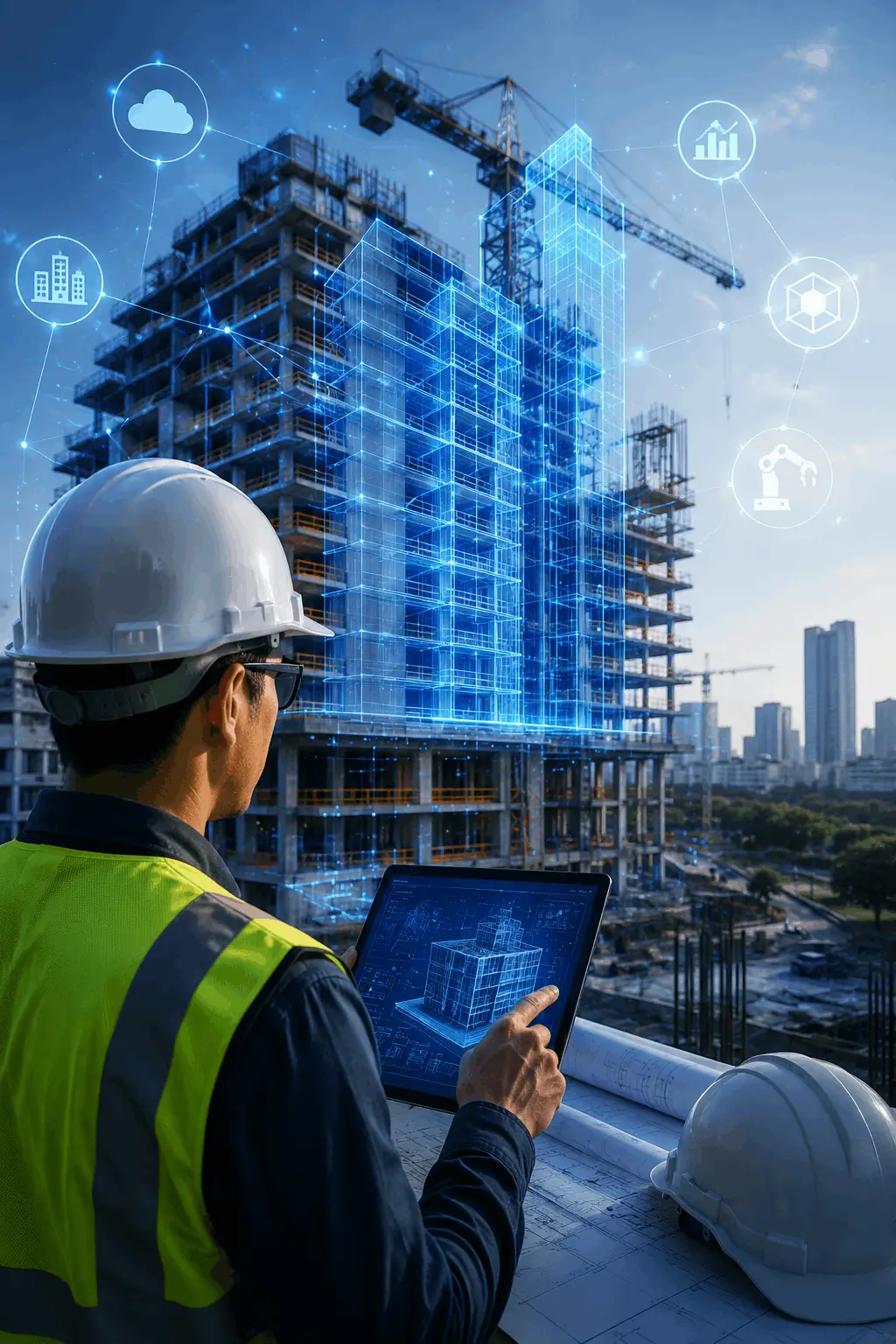
Construction in India is changing fast. What used to depend mainly on manual planning, paper drawings, and on-site coordination is now being supported by digital master planning, BIM workflows, real-time mapping, and more structured project management systems. PM GatiShakti was launched as a national master plan in 2021 to improve multimodal connectivity, planning, financing, technology use, and speedier implementation, while the Digital India GatiShakti platform is described as a digital master planning tool built on a dynamic GIS system with real-time mapping and integrated data from multiple ministries.
For the construction sector, this shift is not just about software. The National Building Code of India 2016 explicitly covers structural safety, fire safety, health and public safety, building materials, structural design, construction project management, building and plumbing services, sustainability, and asset/facility management. In other words, India’s construction ecosystem is already moving toward a more organized, standards-based, digitally supported future.
At a Glance
The digital age of construction is about:
- Better planning before work starts
- Smarter coordination between teams
- Stronger control over cost, time, and quality
- Safer sites and more disciplined execution
- More reliable project records and handovers
- Better lifecycle thinking, not just build-and-forget delivery
For Indian construction companies, this means the firms that adapt early will usually have an advantage in speed, accuracy, and client trust. That is especially important as public and private projects increasingly expect structured planning, technical documentation, and better reporting.
What “Digital Construction” Really Means
Digital construction is the use of digital tools, connected data, and coordinated workflows to plan, design, build, monitor, and maintain projects more effectively. It can include BIM, GIS-based planning, cloud collaboration, mobile reporting, digital QA checklists, drone surveys, scheduling platforms, and digital handover records. In India, the growing emphasis on technology-led infrastructure planning through PM GatiShakti and BIM-related roles shows that digital construction is no longer optional for serious project execution.
For a construction company like Shree Uttamnandan Techno Private Limited, this matters because your work touches multiple disciplines: civil construction, industrial fabrication, electrical services, plumbing, road work, RCC work, and project coordination. Digital systems can help connect those moving parts so the work becomes clearer, faster, and easier to manage.
1) Digital Planning Is Replacing Guesswork
In the digital age, a project should begin with data, not assumptions. PM GatiShakti is built around integrated planning and a GIS-based database that allows ministries to update project information and support planning, reviewing, and monitoring. That shows how important structured digital planning has become in India’s infrastructure environment.
For contractors, digital planning means:
- Better site readiness
- Clearer scope definition
- Fewer surprises after work begins
- More accurate material and manpower planning
- Easier coordination with consultants and clients
When planning is better, execution becomes easier.
2) BIM Is Now a Serious Construction Tool in India
Building Information Modelling has moved beyond buzzword status. India’s National Qualifications Register includes formal roles such as BIM Manager, BIM Coordinator, and BIM Modeler. The BIM Manager – Construction role description says this person is responsible for planning, delivery, and efficient management of the BIM Execution Plan and acts as an intermediary between designers, clients, and architects.
That means BIM is now part of real workforce planning and not just a design-office concept. The practical benefit for contractors is simple:
- Fewer coordination errors
- Better multi-discipline planning
- Improved visibility across the project lifecycle
- Stronger communication between design and site teams
The Economic Survey 2023–24 also highlighted adopting BIM to reduce project delays, construction costs, and systemic inefficiencies, which makes BIM especially relevant for large and complex Indian projects.
3) GIS and Real-Time Mapping Improve Infrastructure Coordination
One of the biggest digital changes in India is the use of GIS-based infrastructure planning. The Digital India GatiShakti page says the platform combines information from all ministries and departments into an extensive database using a dynamic GIS platform, offering real-time mapping of infrastructure projects.
For construction companies, GIS and map-based planning can support:
- Better route and site analysis
- Easier utility coordination
- Better logistics planning
- Faster identification of conflicts
- More informed infrastructure decisions
This is especially useful for road works, industrial sites, utility corridors, and large-site planning.
4) Project Management Has Become More Structured
The National Building Code 2016 includes construction project management as part of its scope, along with building and plumbing services, sustainability, and asset/facility management. This is important because it shows that modern construction is no longer just about building physically; it is about managing the entire process intelligently.
Good digital project management helps with:
- Task tracking
- Milestone monitoring
- Daily site reporting
- Change-order control
- Material planning
- Quality documentation
For clients, this means better transparency. For contractors, it means fewer delays and stronger accountability.
5) Safety Gets Stronger When It Is Digitally Managed
Safety has always been essential in construction, but digital systems make it easier to track, document, and improve. The National Building Code covers structural safety, fire safety, health safety, and public safety, while the BIM Manager qualification also includes managing workplace safety and health within BIM-related construction work.
Digital safety tools can support:
- Site inspection checklists
- Incident reporting
- Safety reminders
- Hazard tracking
- Training records
- PPE compliance documentation
This is not just about compliance. Safer sites usually mean fewer disruptions, better morale, and better project performance.
6) Quality Assurance Becomes Easier to Prove
Digital construction is changing how quality is checked and recorded. Instead of depending only on memory or paper notes, project teams can use digital checklists, photo logs, inspection reports, and progress records to show what was done and when. The BIS framework for the National Building Code also places quality-related concerns inside the wider structure of construction planning, materials, safety, plumbing, and asset management.
That helps contractors:
- Track issues before they grow
- Maintain consistency across teams
- Support faster handover
- Create more reliable project records
- Reduce the risk of disputes later
Quality is not only built on site. It is also built in the recordkeeping.
7) The Digital Age Improves Collaboration
Construction projects involve many people: clients, consultants, supervisors, engineers, subcontractors, vendors, and site teams. Digital collaboration tools make it easier to share drawings, schedules, updates, and approval notes in one flow. The BIM Manager qualification specifically describes the BIM Manager as the intermediary between designers, clients, and architects, which reflects how digital collaboration now sits at the center of construction delivery.
Practical benefits of collaboration tools include:
- Faster decision-making
- Fewer communication gaps
- Easier approval tracking
- Better document control
- Cleaner handover procedures
For growing construction companies, this can be a major competitive advantage.
8) Digital Work Helps Control Cost and Delay
The big promise of digital construction is not glamour; it is control. The Economic Survey 2023–24 specifically linked BIM adoption with reducing project delays, construction costs, and systemic inefficiencies.
That matters because construction losses often come from:
- Poor planning
- Rework
- Material mismatch
- Late approvals
- Coordination errors
- Slow communication
Digital workflows help reduce these risks by making the project more visible. When the team can see the plan clearly, the chances of expensive mistakes usually drop.
9) Skills and Job Roles Are Changing Too
Digital construction is also changing the workforce. India now has formal qualification files for BIM Manager, BIM Coordinator, and BIM Modeler roles, which indicates that digital construction skills are being recognized in the national skills system.
That means the modern construction workforce increasingly needs:
- Digital literacy
- Coordination skills
- Documentation discipline
- Software familiarity
- Communication abilities
- Quality awareness
For companies, this is an opportunity to upskill workers rather than rely only on old methods.
10) Sustainability Is Becoming Part of the Digital Workflow
The National Building Code 2016 includes sustainability in buildings and the built environment, and it also includes asset and facility management. That means construction is being evaluated more in terms of long-term performance, not just initial completion.
Digital tools can support sustainability by helping teams:
- Plan materials better
- Reduce waste
- Improve energy and water thinking
- Document building systems more clearly
- Support maintenance over the asset lifecycle
In India, this is especially useful for companies working across civil works, industrial facilities, infrastructure, and service-heavy projects.
11) Contractors Who Go Digital Build More Trust
In the digital age, trust is built with evidence. Clients want clear progress updates, understandable estimates, photo documentation, and honest communication. When a contractor uses digital systems well, it becomes easier to show professionalism and control.
For a company like Shree Uttamnandan Techno Private Limited, digital construction can strengthen the way you serve clients in:
- Civil construction
- RCC works
- Road projects
- Industrial fabrication
- Electrical services
- Plumbing solutions
- Project management
It helps the company look more organized, more dependable, and more future-ready.
Why Digital Construction Matters Specifically in India
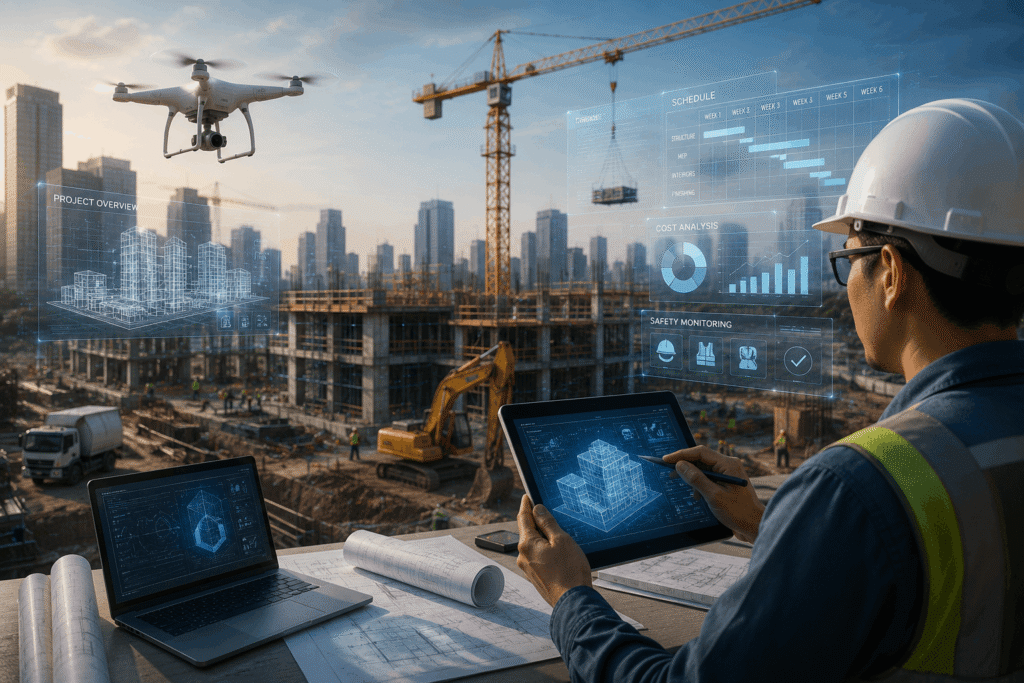
India’s infrastructure ecosystem is large, fast-moving, and increasingly connected to technology-led planning. PM GatiShakti is built around integrated infrastructure planning with technology, innovation, and multimodal coordination, while the Digital India initiative describes it as a digital master planning tool with GIS and real-time mapping. BIS also places construction project management, plumbing services, sustainability, and safety within the national building framework.
That combination makes one thing clear: in India, the digital age of construction is not a distant trend. It is already part of how the best projects are being planned and managed.
Practical Benefits for a Construction Company Like Yours
If your website audience includes owners, developers, industries, and project consultants, you can explain the digital age of construction through benefits they care about:
- Better project clarity
- Faster approvals and communication
- Lower risk of rework
- Stronger safety oversight
- More accurate scheduling
- Easier coordination between civil, mechanical, electrical, and plumbing work
- Better documentation for clients and future maintenance
These are practical, easy-to-understand reasons that connect well with both SEO and real business value.
Common Mistakes Contractors Make in the Digital Age
Even with new tools, some teams still struggle because they treat digital systems as optional extras. Common mistakes include:
- Using digital software without a clear workflow
- Failing to update site data regularly
- Keeping drawings and revisions scattered across devices
- Ignoring training for site teams
- Relying on digital tools but not using them consistently
- Treating reporting as an afterthought instead of a daily habit
Digital tools only help when the team uses them properly.
What Clients Should Expect from a Modern Contractor
If you are a client hiring a contractor in India today, the digital age means you should expect more than just labor on site. A modern contractor should be able to:
- Explain the scope clearly
- Share updates in a structured way
- Keep records of progress
- Coordinate different work streams
- Support safety and quality control
- Manage changes responsibly
That is what modern construction professionalism looks like.
“From digital planning and intelligent design to real-time project management and data-driven decision-making, technology is redefining how the world builds. The companies that embrace innovation today will lead the construction industry tomorrow.”
Final Thought
The digital age of construction is about building smarter, not just building more. In India, the shift is already visible through PM GatiShakti’s integrated digital planning, BIS’s national building framework, BIM roles recognized in the skills ecosystem, and the growing emphasis on reducing delays and inefficiencies through technology. For construction companies that want to stay competitive, the message is simple: digital capability is now part of construction quality.
Use the landscape cover image you created as the featured image for this article, and place a strong internal link to your services page so readers can move from insight to action.
Frequently asked questions
It is the phase where construction uses digital tools such as BIM, GIS planning, online coordination, digital reporting, and data-driven project management to improve quality, speed, and control. PM GatiShakti and the National Building Code show how strongly India is moving toward this model.
Yes. India now recognizes BIM-related roles through the National Qualifications Register, and the Economic Survey 2023–24 highlighted BIM as a way to reduce delays, costs, and systemic inefficiencies.
It helps clients get better planning, clearer communication, better progress visibility, stronger quality records, and more controlled project delivery. Those benefits follow from the kind of integrated planning and management emphasized in PM GatiShakti and NBC 2016.
GIS-based planning makes it easier to map project data, coordinate ministries or teams, and monitor infrastructure in real time. The Digital India GatiShakti page specifically describes the platform as a GIS-based digital master planning tool.
No. While large projects often use advanced digital systems first, smaller construction, industrial, and service projects also benefit from better planning, documentation, and communication. The principle is the same: clearer information usually leads to better execution. This is a practical inference from the national emphasis on planning, project management, and quality.
A company can begin with digital drawings, shared folders, progress reporting, project schedules, photo documentation, and basic coordination tools. Over time, it can expand into BIM, GIS-linked planning, digital QA systems, and asset management workflows. India’s formal BIM qualifications and NBC framework support this direction.